

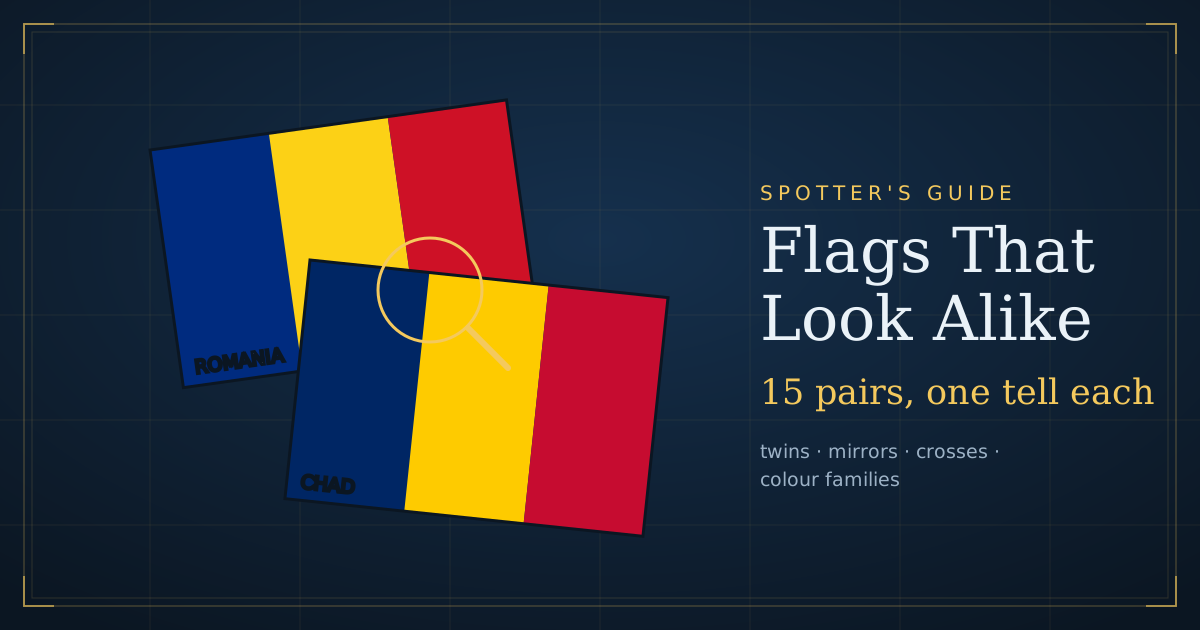
Every flag quiz has the same trap doors. You know the flag is a blue-yellow-red tricolour — but is it Chad or Romania? You can see the Union Jack and the stars — but is it Australia or New Zealand? The colours are right there and they refuse to tell you the answer.
Here is the liberating secret: lookalike flags are almost never separated by colour. They are separated by structure — stripe order, a star, an emblem, a ratio, a cross. Learn one structural tell per pair and the trap doors close permanently. This guide covers the fifteen pairs (and trios) responsible for most wrong answers in Flags mode, organised by why they look alike, with a single memorable tell for each.
What you’ll learn:
- Why so many flags share colours in the first place (four great colour families)
- The identical twins, the mirrors, the cross family and the ensign family
- One tell per pair — plus the memory hooks that make the tells stick
- A cheat-sheet table and a drill routine to lock it all in
Why so many flags look alike
Flags cluster because colours carry politics. Four great colour families — pan-African, pan-Arab, pan-Slavic, and the Nordic cross — account for a large share of all lookalike flags, because new nations deliberately borrowed the palette of movements they identified with.
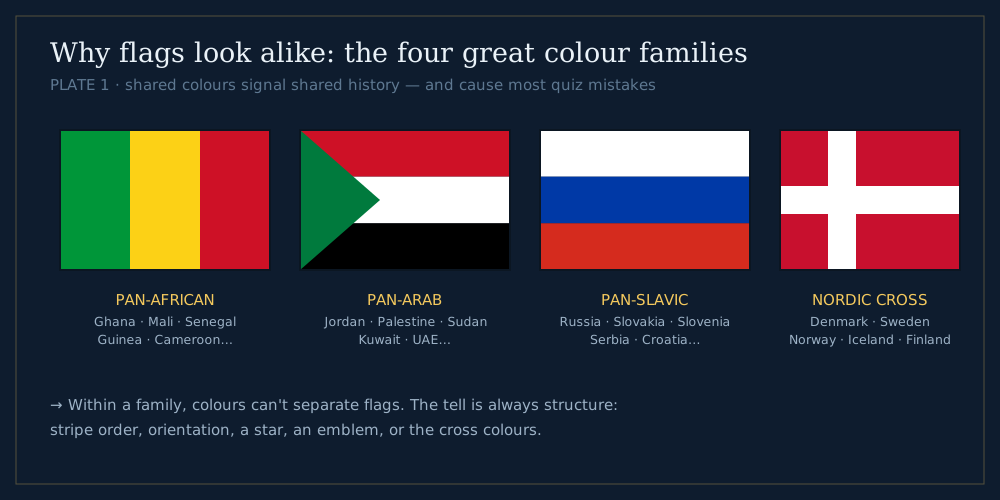 Plate 1 — shared colours signal shared history. The tell is never the palette; it is the structure.
The green-yellow-red of Ghana’s 1957 flag — itself borrowed from Ethiopia, the continent’s uncolonised elder — spread across a dozen newly independent African states. The red-white-black- green of the 1916 Arab Revolt seeded the flags of Jordan, Kuwait, Sudan, Palestine and the UAE. White-blue-red spread from Russia through the Slavic world in the nineteenth century. And five Nordic neighbours all fly the same off-centre cross that Denmark has flown since at least the 1300s — the Dannebrog, often cited as the oldest continuously used national flag on Earth.
So when two flags look alike, that is history doing its job. Your job is smaller: find the one structural feature the two nations didn’t share.
The identical twins
These pairs are genuinely near-duplicates. Even vexillologists squint.
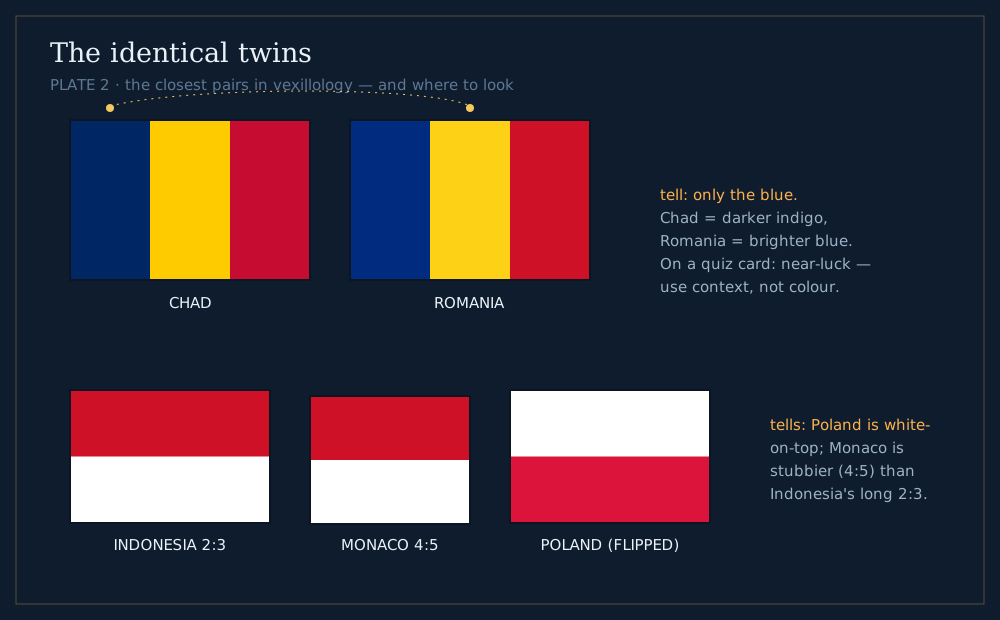 Plate 2 — the closest pairs in vexillology, and where to look.
1. Chad vs Romania. The most infamous pair in vexillology: two vertical blue-yellow-red tricolours, alike enough that Chad raised the matter at the United Nations in 2004 after Romania declined to modify its design. The only on-flag difference is the first stripe: Chad’s blue is a dark indigo; Romania’s is a brighter cobalt. On a small quiz card treat colour as a lean, not a proof — and let context (an African prompt vs a European one) carry the decision.
2. Indonesia vs Monaco. Both are red-over-white bicolours. The official difference is proportion: Indonesia flies long at 2:3, Monaco stubby at 4:5. If the quiz preserves aspect ratio, the stubby one is the principality.
3. Indonesia vs Poland. Same two colours, flipped: Poland is the only one with white on top. Memory hook: snow sits on top of Poland.
4. Qatar vs Bahrain. Two serrated white-and-red Gulf neighbours. Tells: Qatar’s field is maroon, not red, with nine serration points and the most extreme ratio of any national flag (11:28 — nearly twice as long as it is tall); Bahrain is bright red with exactly five points, one for each pillar of Islam.
5. The USA vs Liberia. Liberia was founded by freed Black Americans in the nineteenth century and honoured the connection: same stripes, same canton. Tells: Liberia has a single large star and eleven stripes to the USA’s fifty stars and thirteen.
The mirrors and the shuffle
Same colours, rearranged. Read stripe order like a word — left to right from the flagpole.
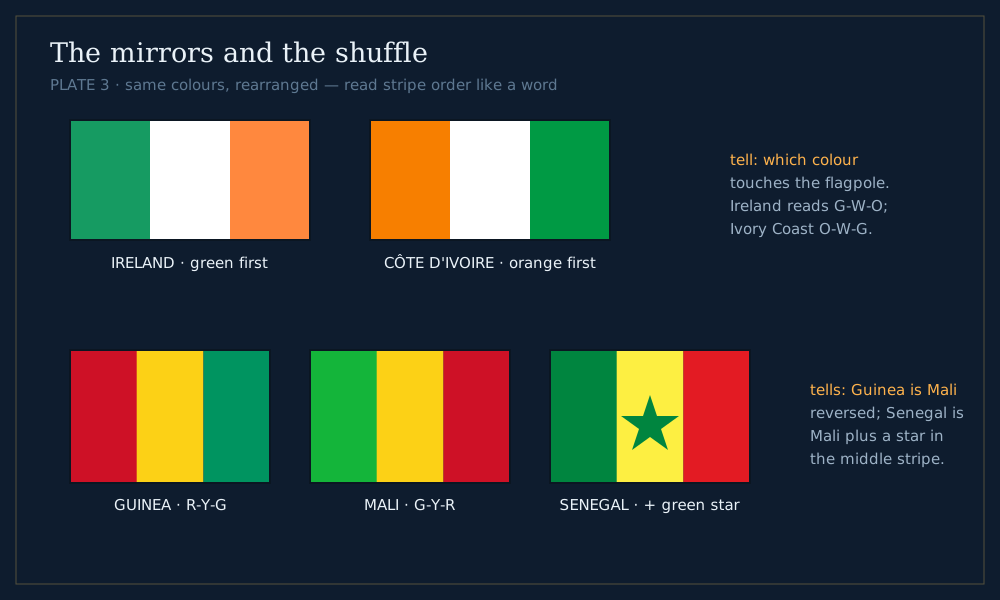 Plate 3 — read the stripes from the pole. Ireland spells G-W-O; Côte d’Ivoire spells O-W-G.
6. Ireland vs Côte d’Ivoire. Green-white-orange versus orange-white-green — exact mirrors. The tell is which colour touches the flagpole: green for Ireland, orange for Côte d’Ivoire. Hook: the Emerald Isle keeps its emerald closest to home.
7. Mali vs Guinea. Both pan-African vertical tricolours; Guinea reads red-yellow-green from the pole, Mali green-yellow-red — mirrors again, and the single most-missed pair in our Flags mode after Chad/Romania.
8. Mali vs Senegal. Identical stripes in the identical order. One tell only: Senegal adds a green five-pointed star in the central yellow stripe. No star, no Senegal.
9. Colombia vs Ecuador vs Venezuela. The trio of Gran Colombia’s heirs, all yellow-blue-red horizontals. Tells: Colombia is plain with a double-height yellow stripe; Venezuela wears an arc of eight white stars across the blue; Ecuador drapes its coat of arms (a condor over Mount Chimborazo) in the centre. Plain, stars, or bird — three flags, three one-word answers.
10. The Netherlands vs Luxembourg. Red-white-blue horizontals both. Tells: Luxembourg’s blue is a light sky-blue and the flag is longer; the Dutch blue is dark cobalt. Hook: the grand duchy is the lighter state in every sense.
11. Russia vs Slovakia vs Slovenia. The pan-Slavic white-blue-red stack. Tells: Russia is bare; Slovakia and Slovenia both add their coat of arms — Slovakia’s double cross sits large and central-left, Slovenia’s small shield with Mount Triglav hugs the top-left corner. Bare, big badge, small badge.
The cross family
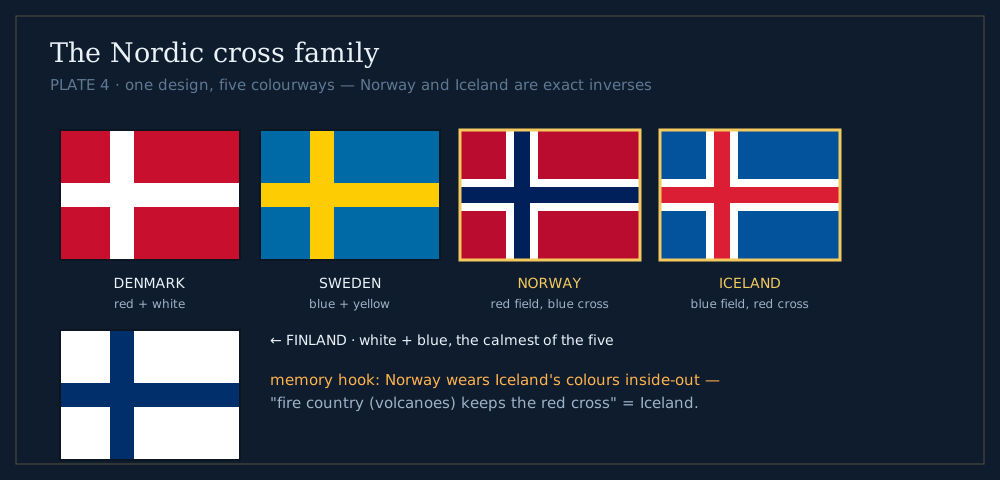 Plate 4 — one design, five colourways.
12. Norway vs Iceland. The family’s evil twins: Norway is a red field with a blue cross; Iceland is a blue field with a red cross — exact colour inverses. Hook: Iceland is the land of volcanoes, so the fire stays in the cross; Norway, the richer red field, wears the sea in its cross. Once you own this pair, the rest of the family is easy: Denmark is red-and-white only, Sweden blue-and-yellow, Finland white with a plain blue cross.
13. Denmark vs the England cross (and Switzerland’s inverse). A bonus cluster from the same geometry: Denmark’s off-centre white-on-red cross versus England’s centred red-on-white St George’s cross — off-centre means Nordic. And Switzerland is the red flag with a white plus-sign, one of only two square national flags (with Vatican City).
The ensign family
14. Australia vs New Zealand. Both are British blue ensigns: Union Jack in the corner, Southern Cross on the fly. Two tells, use either: New Zealand’s four stars are red with white borders; Australia’s six stars are all white — including the big seven-pointed Commonwealth Star directly beneath the Jack. Count or check colour; both are instant.
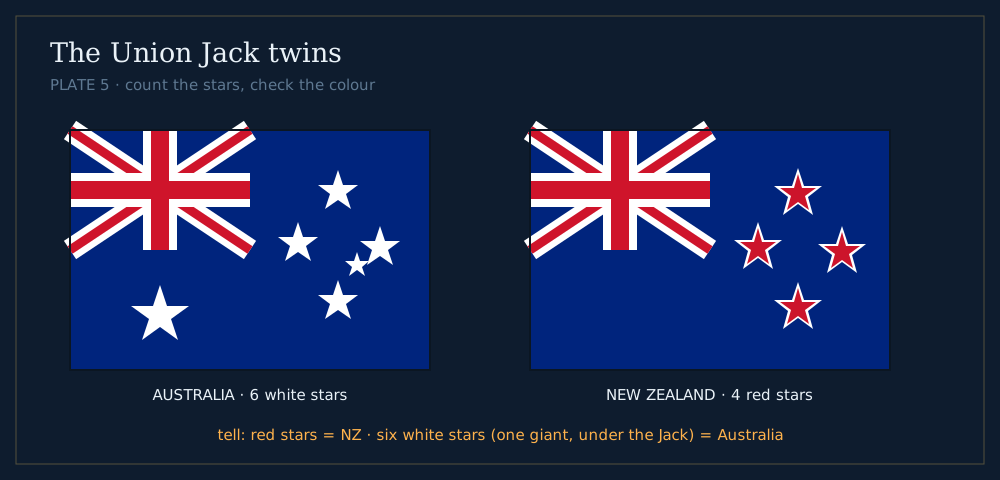 Plate 5 — red stars, New Zealand; six white stars, Australia.
15. Italy vs Mexico. Green-white-red vertical tricolours. Tells: Mexico carries the eagle- and-serpent coat of arms in the centre stripe, uses a darker green, and flies longer at 4:7 versus Italy’s badge-free 2:3. On any card big enough to show the eagle, the eagle decides.
💡 Pro tip: notice that every tell above is one of just five types — stripe order, a star/emblem, cross position, colour shade, or aspect ratio. When you meet a new lookalike pair anywhere, don’t memorise the pair; classify the tell. Five categories cover all of vexillology’s trap doors.
The next tier: pairs you’ll meet after these
Master the fifteen and a second tier of lookalikes surfaces. They yield to the same five tell types, so we’ll take them at speed:
The Central American stack. Honduras, El Salvador and Nicaragua all fly blue-white-blue horizontals descended from the flag of the Federal Republic of Central America — with Argentina’s sky-blue bands as a fourth impostor from another hemisphere. Tells: Argentina wears the golden Sun of May; the three Central Americans differ by centre emblem — Honduras scatters five blue stars, El Salvador and Nicaragua both centre their coats of arms, with El Salvador’s ringed by golden wreath and lettering. On tiny cards the emblem blurs; the stars-vs-seal distinction survives longest.
The Arab Revolt cousins. Jordan, Palestine, Sudan, Kuwait and the UAE all remix red-white-black-green. Tells: Jordan adds a white seven-pointed star in its red triangle; Palestine’s triangle is bare; Sudan runs its triangle from a red-topped tricolour; Kuwait uses a trapezoid instead of a triangle; the UAE turns the red into a vertical pole-stripe. Star, bare, stripe order, trapezoid, vertical bar — five flags, five one-word tells.
The crescent twins. Turkey and Tunisia both fly a white crescent-and-star on red. Tells: Tunisia’s crescent sits inside a white disc; Turkey’s floats free on the red field, slimmer and closer to the hoist.
The star-on-stripes trio. Cameroon, Senegal (again) and Ghana all combine pan-African stripes with one star. Tells: Ghana’s stripes are horizontal with a black star; Cameroon’s are vertical with a yellow star dead-centre; Senegal’s are vertical with a green star. Orientation first, then star colour.
Notice that nothing new was required: emblem, stripe order, orientation, shape geometry, shade. The five tell types you learned on the famous fifteen just keep working — which is the real lesson of this guide.
The one-tell cheat sheet
| Pair | One tell |
|---|---|
| Chad / Romania | Chad’s blue is darker (near-luck on small cards — use context) |
| Indonesia / Monaco | Monaco is stubby (4:5); Indonesia long (2:3) |
| Indonesia / Poland | Poland is white on top |
| Qatar / Bahrain | Maroon + 9 points = Qatar; red + 5 = Bahrain |
| USA / Liberia | One star, 11 stripes = Liberia |
| Ireland / Côte d’Ivoire | Green at the pole = Ireland |
| Mali / Guinea | Red at the pole = Guinea |
| Mali / Senegal | Green star = Senegal |
| Colombia / Ecuador / Venezuela | Plain / arms / arc of stars |
| Netherlands / Luxembourg | Sky-blue stripe = Luxembourg |
| Russia / Slovakia / Slovenia | Bare / big double-cross / small corner shield |
| Norway / Iceland | Field colour: red = Norway, blue = Iceland |
| Denmark / England | Off-centre cross = Nordic |
| Australia / New Zealand | Red stars = NZ; six white stars = Australia |
| Italy / Mexico | Eagle in the middle = Mexico |
When the card betrays you
One practical warning before the drill plan: quiz rendering can erase your tell. The three failure modes, and the fallbacks:
Colour drift. Screens, dark modes and compression shift shades — the exact axis that separates Chad from Romania and the Netherlands from Luxembourg. When your tell is a shade, demote it to a lean and look for a second signal (context, or the flag’s proportions).
Ratio normalisation. Many quizzes stretch every flag to the same card, destroying proportion tells like Indonesia 2:3 vs Monaco 4:5 and hiding Qatar’s spectacular 11:28. Structure tells — stars, emblems, stripe order — survive normalisation; prefer them whenever a pair offers both.
Tiny emblems. At thumbnail size, Ecuador’s condor and Slovenia’s shield collapse into smudge. Train the silhouette of the smudge: Ecuador’s arms make a wide dark block in the middle stripe, Slovenia’s a small dot in the corner. Presence-and-position needs far fewer pixels than detail.
The rule of thumb: a structural tell beats a colour tell, and a colour tell beats a ratio tell — sort your personal cheat sheet in that order and the rendering gods can’t touch you.
How to drill the pairs
Reading a list builds recognition for a day; retrieval builds it for good. The routine that works:
- Play Flags mode daily and keep a note of every pair you actually confuse — your personal list will be five to eight pairs, not all fifteen.
- Drill the pair, not the flag. When you miss Guinea, don’t stare at Guinea; put Guinea and Mali side by side and say the tell out loud (“red at the pole — Guinea”). The confusion is the unit of learning.
- Say the hook, not the fact. “Snow on top of Poland” outlives “white stripe uppermost” by months. Silly is sticky.
- Cross-train. Flags anchor to places: a round of Globle or Capitals mode after flag drills ties each flag to its map position and capital, and the three memories reinforce each other. Our outline recognition guide applies the same tell-based method to country shapes, and the geography games roundup has more flag games to practise in.
Two weeks of this and the trap doors stop being trap doors — you will find yourself hoping the quiz serves Chad, just to show off.
Frequently asked questions
Which two flags are the most similar in the world?
Chad and Romania — two vertical blue-yellow-red tricolours whose only on-flag difference is the shade of blue (Chad's is darker). The resemblance is close enough that Chad formally raised the issue at the United Nations in 2004; Romania kept its design, and quiz players have suffered ever since.
How do you tell Australia's flag from New Zealand's?
Check the Southern Cross: New Zealand shows four red stars with white borders, while Australia shows six all-white stars — five in the cross plus the large seven-pointed Commonwealth Star under the Union Jack. Either the count (4 vs 6) or the colour (red vs white) settles it at a glance.
What is the difference between Norway's and Iceland's flags?
They are exact colour inverses of the same Nordic cross design: Norway is a red field with a white-bordered blue cross; Iceland is a blue field with a white-bordered red cross. A common memory hook: volcanic Iceland keeps the fire-red in its cross.
Why do so many African flags use green, yellow and red?
They are the pan-African colours, taken from the flag of Ethiopia — the continent's historic uncolonised state — and popularised by Ghana's 1957 independence flag. More than a dozen African nations adopted the palette, which is why stripe order and small emblems (like Senegal's green star) are the only way to separate flags such as Mali, Guinea and Senegal.
Which national flags are not rectangles?
Nepal's is the only non-quadrilateral national flag — a double pennant of two stacked triangles. Switzerland and Vatican City fly the only square national flags. Every other UN member uses a rectangle, which is why aspect ratio (like Qatar's extreme 11:28) can itself be a tell.
We build and maintain the seven geography games on this site, including Flags mode and its flag artwork. Think we missed a lookalike pair? Tell us and we’ll add it to the drill deck.